
A 30-day AI readiness roadmap
An AI roadmap holds when the readiness work comes first. Thirty days is enough to find out where the organization actually stands, what moves first, and what number has to be true before the next step gets funded. Here is how I run it.
The rule underneath all of it: readiness before roadmap
What stalls AI adoption is usually readiness: whether leaders agree on the goal, and who gets to decide. Skill is rarely the problem.
So the first two weeks measure readiness. The last two turn it into a plan.
Every phase in the plan is unlocked by a metric, never by a date.
Week 1: score readiness on five dimensions
One 60 to 90 minute conversation with leadership, zero prep on your side, using my readiness scorecard.
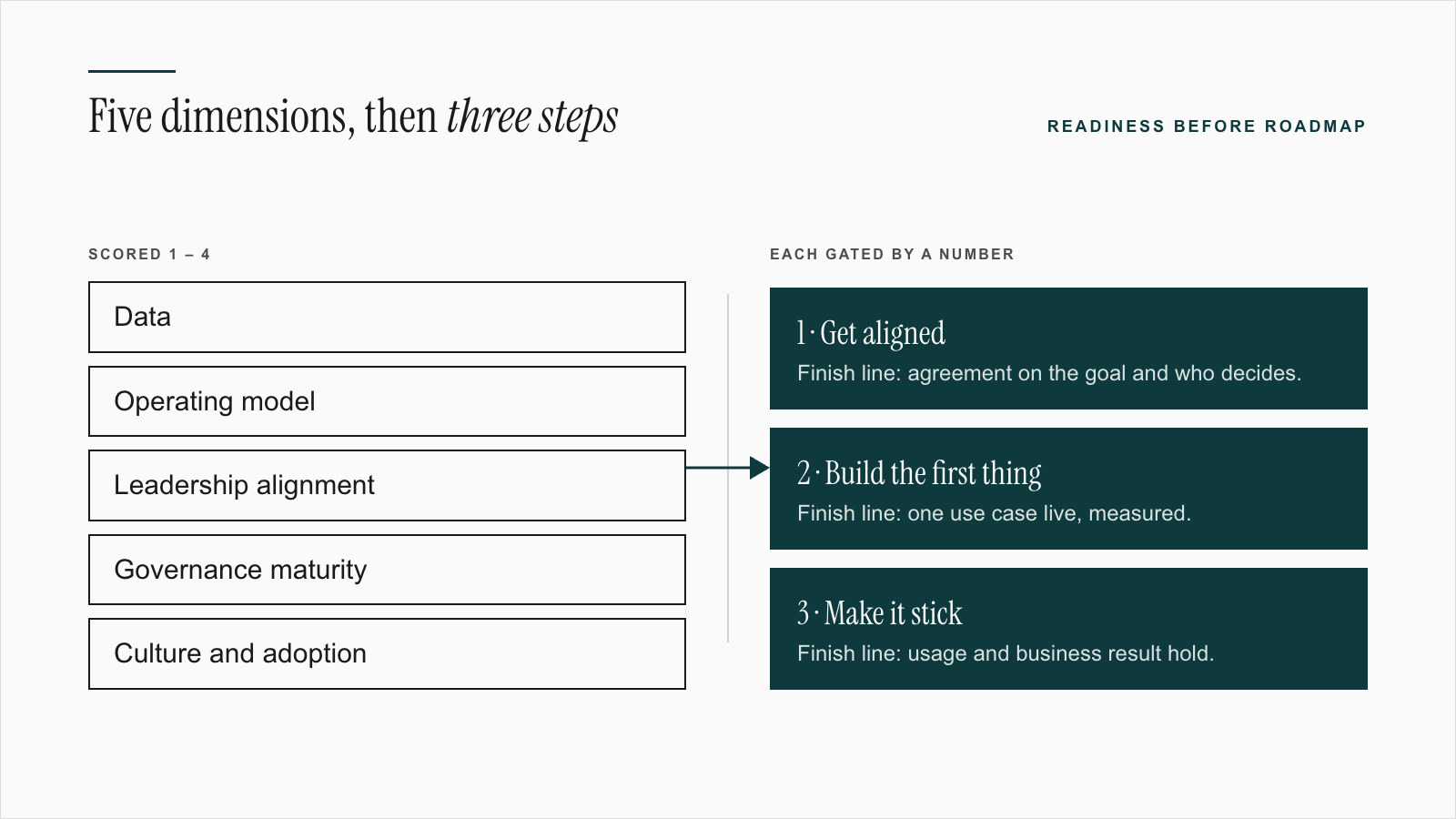
Five dimensions, each scored 1 to 4: data, operating model, leadership alignment, governance maturity, and culture and adoption.
Three yes-or-no questions per dimension. The scores tell you where you stand and where to start.
Interviews with the people who do the work, the people who approve it, and the people accountable for it. The roadmap is built on what the team is experiencing, the reality and voice of the people closest to the work.
Week 2: rank the gaps
Readiness and capability gaps across the five dimensions, ranked by what blocks the most.
Most organizations find their biggest gaps are decision rights and governance. Both can be fixed in weeks.
The early warning signs get named now: workarounds, and the people furthest from the planning room. Adoption succeeds or stalls at the edges, so we watch the edges from the start.
Week 3: decide what moves first
Every idea scored the same way: value, readiness, and what it depends on.
Two tracks, one set of rules: the business side, tied to your normal planning cycle, and the technology side for the tools behind it.
The output is a sequence: the three worth doing this year, the one that goes first, and the reasoning that holds when a new executive asks why.
Week 4: write it down and say it out loud
A short written plan in three steps: get aligned, build the first thing, make it stick. Each step has a clear finish line and a number that says you're ready for the next one.
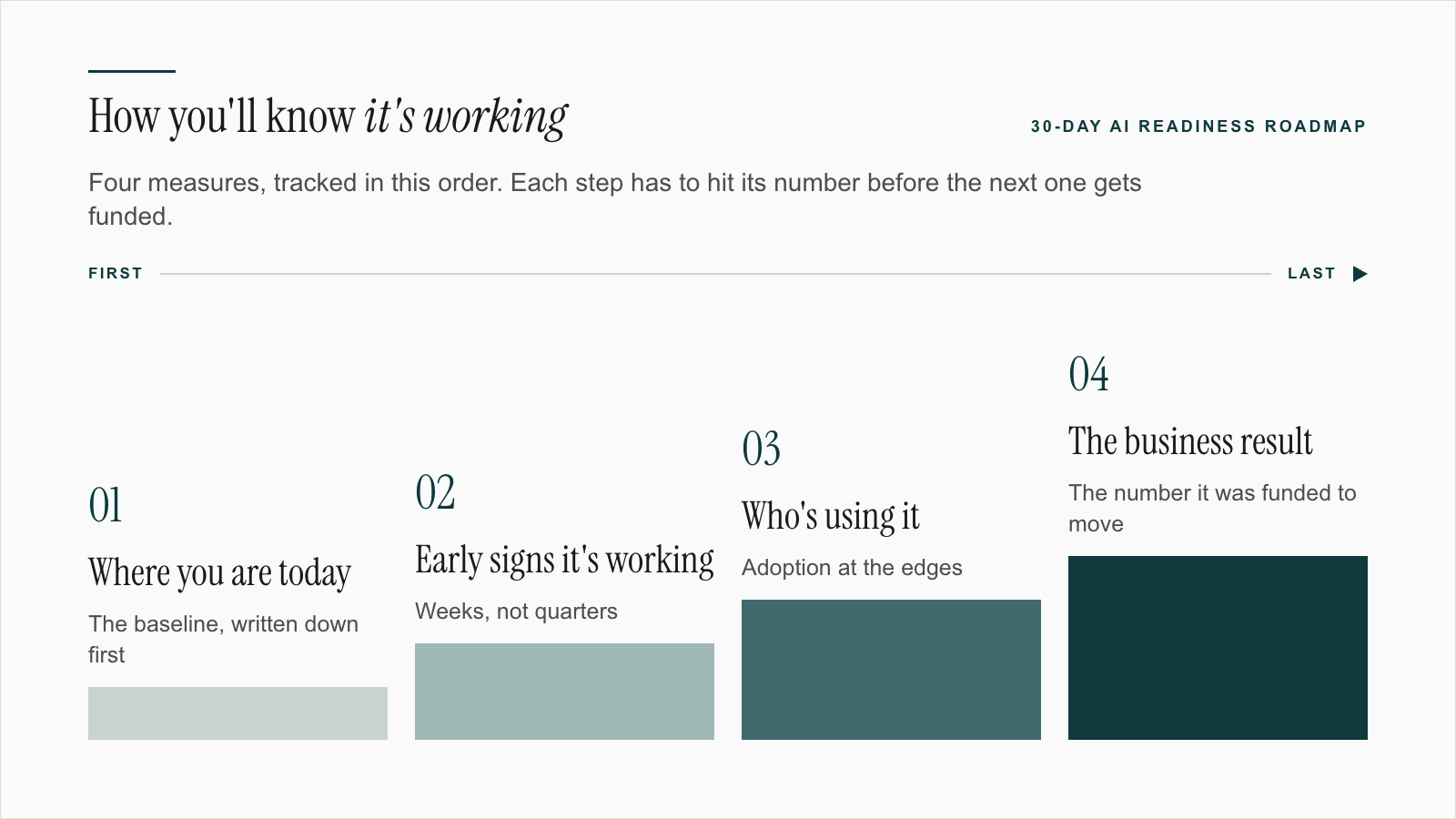
Owners by name. Measures in this order: where you are today, early signs it's working, who's using it, and the business result.
The investment, staged: fund the first step, and the next one when the first has earned it. Plan on half the expected benefit. Decide in advance what would make you stop. Name the cost of standing still.
A leadership readout where the team commits, in front of each other, to the sequence.
What makes it hold
It's built on what the team is experiencing, the reality and voice of the people who do the work, so people recognize themselves in it.
It's sequenced, so the first win funds the second.
Every step has a number. Nothing advances on sentiment.
Every recommendation comes with the reasoning behind it, so you can defend it in a room.
You own it. Your team can run it with or without me.
It's short. A plan fits on a few pages.
What it costs and what comes after
Discovery + Roadmap is $6,600, flat, thirty days.
Many organizations take the roadmap and run it themselves. That's the point.
Some ask me to stay for a 60-day or 90-day project, or on a monthly retainer. Both start with a fit call.
Know you need to move and want to know what moves first? Book a free fit call and we'll find out in thirty minutes whether thirty days is the right shape.